Description
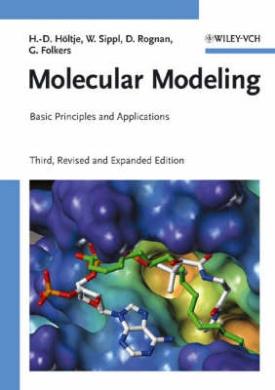
Umfassend und przise, besonders fr Anfnger gut verstndlich: Dieser Band erklrt die Grundlagen der Moleklmodellierung kompetent und nachvollziehbar. Ausfhrlichen Informationen zur Modellierung von kleinen Moleklen und Proteinen folgen durchgearbeitete Beispiele, die dem Leser den Weg zum ersten eigenen Experiment ebnen. Neu in dieser dritten Auflage ist ein Kapitel zur Chemogenomik, das (gemeinsam mit dem berarbeiteten und erweiterten Beispiel zur Behandlung komplizierterer Biomolekle) den gegenwrtigen Trend zur “chemischen Biologie” widerspiegelt. Die Autoren, erfahrene Dozenten in diesem Themenbereich, garantieren die Praxistauglichkeit des Bandes als Begleiter einschlgiger Vorlesungen. Fr Fachleute interessant: Als einziges gegenwrtig erhltliches Werk enthlt das Buch einen systematischen Vergleich der Mglichkeiten und Grenzen moderner MM-Verfahren und entsprechender Software-Pakete. Hans-Dieter Hltje is director of the Institute of Pharmaceutical Chemistry at the Heinrich-Heine-Universitt Dsseldorf (Germany) where he also holds the chair of Medicinal Chemistry. His main interest is the molecular mechanism of drug action. Wolfgang Sippl is Professor of Pharmaceutical Chemistry at the Martin-Luther-University of Halle-Wittenberg (Germany). He is interested in 3D QSAR, molecular docking and molecular dynamics, and their applications in drug design and pharmacokinetics. Didier Rognan leads the Drug Bioinformatics Group at the Laboratory for Molecular Pharmacochemistry in Illkirch (France). He is mainly interested in all aspects (method development, applications) of protein-based drug design and virtual screening. Gerd Folkers is Professor of Pharmaceutical Chemistry at the ETH Zrich (Switzerland). The focus of his research is the molecular interation between drugs and their binding sites. Introduction Small Molecules – Generation of 3D-Coordinates – Computational Tools for Geometry Optimization – Conformational Analysis – Determination of Molecular Interaction Potentials – Pharmacophore Identification – 3D QSAR Methods A Case Study for Small Molecule Modeling: Dopamine D3 Receptor Antagonists – Building a Pharmacophore Model – 3D QSAR Analysis Introduction to Comparative Protein Modeling – Where and How to get Information on Proteins – Terminology and Principles of Protein Structure – Comparative Protein Modeling – Optimization Procedures – Model Refinement – Molecular Dynamics – Validation of Protein Models – Properties of Proteins Virtual Screening and Docking – Preparation of the Partners – Docking Algorithms – Scoring Functions – Postfiltering Virtual Screening Results – Comparison of Different Docking and Scoring Methods – Examples of successful Virtual Screening Studies Scope and Limits of Molecular Docking – Docking in the Polar Active Site that Contains Water – Including Cofactor in Docking? (NEW) – Impact of Tautomerism on Docking (NEW) Chemogenomic Approaches to Rational Drug Design (NEW) – Description of Ligand and Target Spaces – Ligand-based Chemogenomic Approaches – Targed-based Chemogenomic Approaches – Target-Ligand Based Chemogenomic Approaches A Case Study for Protein Modeling: the Nuclear Hormone Receptor CAR as an Example for Comparative Modeling and the Analysis of Protein-Ligand Complexes (NEW) – The Biochemical and Pharmacological Description of the Problem – Comparative Modeling of the Human Nuclear Hormone Receptor CAR – Analysis of the Models that Emerged from MD Simulations – Analysis of CAR Mutants – Modeling of CAR-Ligand Complexes – The CAR X-Ray Structure Comes into Play – Virtual Screening for Novel CAR Activators