Description
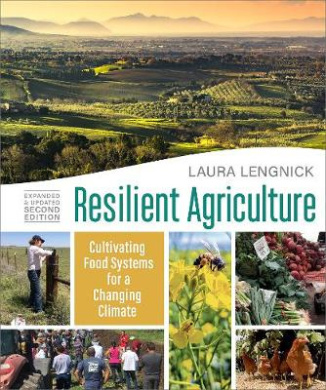
Laura Lengnick is an award-winning soil scientist with 30 years of experience working as a researcher, policymaker, educator, activist and farmer to put sustainability values into action in U.S. food and farming. Her research in soil health and sustainable farming systems was nationally recognized with a USDA Secretary’s Honor Award in 2002 and she served as a lead author of the 2013 USDA report, Climate Change and Agriculture in the United States: Effects and Adaptation. Over the last decade, Laura has led federal, state and regional projects exploring agricultural climate solutions that cultivate resilient land, people and community. Laura served on the leadership team of NC-ADAPT in 2015, led the Climate-Resilient Agriculture Initiative in the Hudson Valley of New York in 2018, and led the design of Clemson University’s Multifunctional Agriculture Destination in 2019. She was the agriculture lead on the Natural and Working Lands Action Plan included in the North Carolina Climate Risk Assessment and Resilience Plan released in 2020. Laura is a Visiting Professor in the College of Agriculture, Forestry and Life Sciences at Clemson University and a member of the Planetary Health Lab at the University of Edinburgh (Scotland). She founded and owns Cultivating Resilience, LLC, a private firm that works with organizations of all kinds to integrate resilience thinking into operations and strategic planning. In 2021, Laura joined the Glynwood Center for Regional Food and Farming as the Director of Agriculture. She resides in Asheville, NC. Acknowledgments PART 1- Why Think Resilience? 1. Waking Up to Climate Change – Unprecedented – Running into Resilience – A Real-World Test of Resilience – A Word About Hope 2. Climate Change Is Changing the Weather – Two Decades of Disaster – The Climate Change Challenge – Understanding Climate Vulnerability 3. Understanding Exposure – Regional Changes and Expected Changes in Weather 4. Understanding Sensitivity – Crops and Livestock – Soil and Water – Weeds, Insects and Disease – People, Community, Money 5. Understanding Adaptive Capacity – Farms and Ranches Are Ecosystems – Cultivating Adaptive Capacity 6. Managing Climate Risk: Adaptation Stories – Farmers and Ranchers in the Northwest and Southwest – Farmers and Ranchers in the Great Plains – Farmers in the Midwest – Farmers in the Northeast and Southeast- A New Path for American Agriculture? PART 2- The Rules of Resilience? 7. A New Way to Think About Solutions – Resilience Is Not What You Think – Describing a Social-Ecological System: Focal Scale, Identity and Desirability – More Than Bouncing Back 8. The Qualities and Behaviors of Resilient Systems – The Raw Material of Resilience: Diversity – A Diversified Portfolio of Assets – Key Resilience Behaviors – Specified and General Resilience – Resilience Design Principles 9. The Rules of Resilience – Diverse Networks of Reciprocal Relationship – Regional Self-Reliance – Accumulation of Community-Based Wealth – Moving Beyond Industrialism: A Just Transformation 10. Is Sustainable Agriculture a Resilient Agriculture? – What is Sustainable Agriculture? – Cultivating Resilience with Sustainable Agriculture 11. Resilient Agriculture: New Tools for Shaping Change – Navigating Uncertainty with Adaptive Management – Whole Farm Planning Is Adaptive Management – Nature-Based Solutions: Cultivating Healthy Ecosystems for Land, People and Community – The Adaptive Continuum: Protect, Adapt, Transform – Barriers to a Resilient Agriculture: From the Farm Gate to Your Plate PART 3- What Path to Resilience? 12. The Light and the Dark of These Times – From Land to Mouth: In Search of Sustainable Food – Indigenous Foodways – The Good Food Movement 13. Adding Resilience to the Menu – The Regional Roots of Resilience – Metropolitan Foodsheds 14. The Way Forward – Twelve Things That You Can Do to Cultivate a Resilient Agriculture PART 4- Real World Resilience: Stories of Land, People and Community 15. Vegetables – A.G. Kawamura, Fullerton, California – Hannah Breckbill, Decorah, Iowa – Rebecca Graff and Tom Ruggieri, Kearney, Missouri – Marc White, Keymah Durden and David Hester, Cleveland, Ohio – Ira Wallace and Mary Berry, Mineral, Virginia – Pam Dawling, Louisa, Virginia – C. Bernard Obie, Roxboro, North Carolina 16. Fruits and Nuts – Mark Shepard, Viroqua, Wisconsin – Walker Miller, Six Mile, South Carolina 17. Grains – Bryce Lundberg, Richvale, California – Gail Fuller, Severy, Kansas 18. Livestock – Albert Straus, Marshall, California – Jordan Settlage, St. Mary’s, Ohio – Jamie Ager, Fairview, North Carolina Notes Index About the Author About New Society Publishers